
Even After Converting To Christianity And Islam, The Dalits Are Still Trapped In Their Untouchable Identities.
The world has taught, learned, and talked a lot about Brahmanism, brahmanical oppression, and casteism within Hindu society. The caste-based discrimination has always been reported and linked to the Hindu society. However, untouchability isn’t subject to Hinduism only. While the casteist slur by the upper caste Hindus always finds a column in every big news site to symbolize a revolt against Brahmanism, the untouchables outside the Hindu society still wait for their recognition as a backward class. The lower caste in Hindu society enjoys reservation and special rights, while the Muslim and Christian lower castes are kept out of the scheduled caste benefits and reservations.
Untouchability might be linked to Hinduism every time, but there is a lot more to know about the invisible untouchables of India. Casteism and discrimination aren’t only limited to the Hindu society. However, as a society, we majorly find our interest in Hindu lower castes and ignore the others while talking about human rights and development. The reasons for the selective outrage and activism are indescribable. It might be a part of selective social reform, or propaganda run by the missionaries, or some political agenda. There are conclusively agreements that agree on the selective activism and actions taken on the caste-based discrimination outside the Hindu society. There is a lack of data, reporting, and reform on the cases related to casteism among the lower castes other than the Hindus. Whatsoever the reason is, an important part of our society is still living behind the walls and being deprived of their share of rights provided by the constitution.
Unfortunately, most people don’t know the classification of castes and groups in the Muslim, Christain, Sikh, and Buddhist societies. Despite the Abrahamic faith and the Sikhism denies and does not talk about the various castes, caste-based discrimination is a repugnant truth in all of them.
The Castes Oppression- Not A Hindu Problem Alone

The book by Ahmed Ali on Purani Dilli, Ali Anwar’s Masawat Ki Jung, and Masood Alam Falahi’s Hindustan Mein Jaat Pat Aur Musalman reflects the reality of casteism and the discrimination faced by the lower caste Muslims. Among the Indian Muslims, caste-based discrimination is no different from what the Hindu lower castes face by the upper castes.
As per the PEW survey, more Muslims than Hindus are against the inter-caste marriages
– The caste classification and discrimination in Christianity are so much alive. There have been reports for building a separate cemetery and Churches for the lower caste Christians. The inter-caste marriages amongst the Christians are also very rare and sometimes lead to honor killing. Historian Prasad Rajendra writes that the Syrian Christians would go for a ritual bath after contacting a lower caste Christian.

K. C. Zachariah, in his book – The Syrian Christians of Kerala: Demographic and Socio-Economic Transition in the 20th Century (2006), writes that the Syrian community is the largest per household landholder in Kerala. Syrian Christians are the most advanced community in the state with reasonable access to education, govt. Jobs, and other services
– Likewise the Abrahamic faiths, Sikhism also claims to be a caste-free religion. However, there have been several cases of caste-based discrimination, assaults, and violence reported. In the villages of Punjab, the lower caste Sikhs often face oppression and discrimination even in the Gurudwaras. From a separate place of worship to separate rows to eat langers, the lowers caste Sikhs are often kicked out of their Sikh identity.
But why the media hardly talks about casteism and caste-based violence and discrimination other than Hinduism? The answer might be in the screenshot to this blog of ‘The Wire.’

The reason behind the selective outrage is very clear and transparent. The left media and the left-liberals want a collective attack on the Hindus to establish their superiority. The hatred towards the Hindus is not deniable. Their propaganda is making the untouchables and lower castes suffer by keeping them invisible from the rest of the world.
The propaganda isn’t only a part of left-media hatred, but also the missionaries. The missionaries trap the Hindu lower castes and tribes by promising them to give them dignity and make them free from caste-based discrimination. The Christian missionaries started to establish in India in the 1500s, and since then, they have run several drives for mass conversion of lower caste Hindus. Those who converted had changed their religion, but couldn’t manage to erase their Dalit identities and often face the same, or even worse, kind of discrimination and violence. The Indian constitution doesn’t even recognize them as a backward class under the SC/ST act.
The Invisible Untouchables
-
Muslim Untouchables
As there is a lack of data, reports, and registered cases, it is quite hard to show the intensity and severity of untouchability among Indian Muslims. However, it is not deniable that the lower caste Muslims often face the casteist slur, discrimination, and violence by the upper caste Muslims.
 Snippet from velivada.com
– Among the Indian Muslims, there are three main castes and over a hundred subgroups. At the top, there are Asrafs, then Ajlafs, and at the bottom Arzals. The Ajlafs and Arzals are considered the lower castes, while the Asrafs are considered nobles. Ajlafs/Arzals often face discrimination, casteist slur, and violence by the Asrafs. Pasmanda, who are the Arzals, and other lower-caste Muslims have threatened to build a separate Mosque for themselves, and some have already built it.
https://twitter.com/GIobalDirector/status/1421377221961293825?s=20
The Dalit Muslims and the Pasmanda are the most backward class in India, their literacy rate falls even behind the Dalit Hindus at 70 percent. According to the book – ‘Backward and Dalit Muslims: Education, Employment and Poverty, by Surinder Kumar, Fahim Uddin, Prashant K Trivedi, and Srinivas Goli, the percentage of non-literate Dalit Muslims was 30 percent, which is 26 percent amongst the Hindus.
The Dalit Muslims are considered impure and unclean by Asrafs. They face discrimination even in the Mosques and the social gatherings. The lower caste Muslims are sometimes refused to drink water from the vessels that the Asrafs use. They are not allowed to sit and eat with the upper caste Muslims and are often offered to eat the leftovers.

The educational backwardness amongst the Dalit and other lower-caste Muslims can be seen at the top level too. While only about 15 percent of Indian Muslims are identified as Asrafs, still they dominate the educational sector. Roughly 90 percent of minority educational institutes are administered by the upper caste Muslims. In the top universities like AMU, around 90 percent of teaching faculty is dominated by the Asrafs.
The issues faced by the lower caste Muslims aren’t addressed or even reported. Unlike the Hindu, Buddhist, and Sikh lower castes, the Muslim Dalits do not get classified in the ‘scheduled caste’ category. The Dalit Muslims face even the worse kind of discrimination. They do not get to bury their dead in the upper caste burial grounds. They are not invited to the wedding functions. Students are seated separately in the schools, even the Mosques are not free from discrimination.

-
Christian Untouchables
The colonial Christians used caste-based discrimination amongst the Hindus as a tool to establish their missionaries. Mass conversion of the backward castes and tribes took place across the country. The Chuhras, Chamars, Vankars of Gujarat, Pulayas, and other backward communities converted to Christianity to escape the untouchability, poverty, occupational patterns, occupational discrimination, and their ‘Dalit identities.’ They desired to live a well-off life, access to education, equality, basic rights, and dignity. However, they managed to change their religious identity, unfortunately, they could not erase their Dalit identity.
The Dalit Christians often face discrimination by the upper caste Christians. A report by the Tamil Nadu Untouchability Eradication Front (TNUEF) says the discrimination and caste-based practice against Dalit Christians are significantly increasing. The Dalit Christians are denied to get the priesthood, separate chapels, and burial of their dead. Dalit Christians account for more than 50% of the total population of Catholics, still are not administered to any major posts in Churches. In some churches, the bodies of Dalits are not allowed for rituals. A petition submitted in Tirupur, Tamilnadu, alleged that around 50 Dalit Christian families in the village were denied a burial ground by those belonging to dominant communities.
Nick Gier in an article published in Idaho State Journal mentions separate entrances and toilets for Dalit Christian worshippers at a Church in Hyderabad. Many Dalit Catholics even threatened to start their own separate Churches if their demand to end casteism and discrimination against Dalits in the Catholic Church is not met.
-
Sikh Untouchables
A lot of my friends give me examples of Sikhism as a reference to an ideal and caste-free faith. Unfortunately, the dark shadows of the evil social practice have not left Sikhism from its viciousness either.
The Amazon Prime web series ‘Patalok’ shows the dark reality of Punjab’s lower caste Sikhs. The web series showed the Manzar Sikh community light and how a family was bullied by the upper caste Sikh community. A boy, who fought against the upper caste bullies, was punished by the Jats of the village. The boy manages to escape, but her mother was gang-raped by the Jats as an avenge to her son.
This might be just a scene added to a web series, but it is no different from the reality of Sikh jats. In January 2006, Bant Singh, a Dalit Sikh was brutally attacked by some upper caste Sikhs. In the attack, He lost both his arms and a leg for fighting to get justice for his minor daughter who was gang-raped by the upper caste.
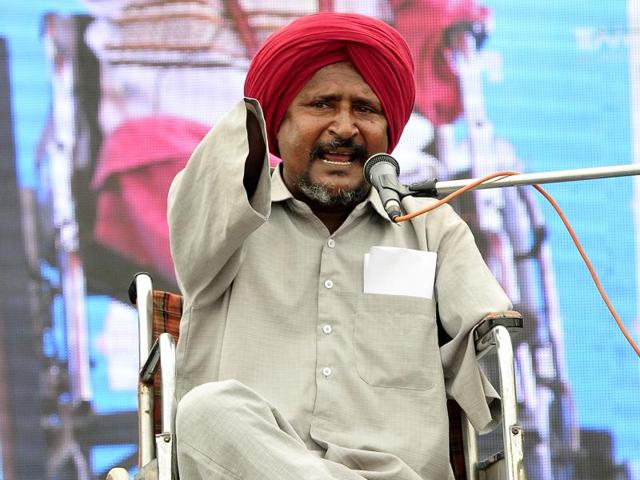
Among the Sikhs, there are separate gurudwaras, langers, and kitchens. In 2018, when a couple went to the main Gurudwara in Maanwala village in Dhuri, Punjab to perform funeral rituals of their mother, they were told to visit their ‘own Gurudwara.’
There have been cases where the Dalit and other lower caste Sikhs were denied entry to the main Gurudwara, they complained to face discrimination in Langer hall. Stalin K Padma in his documentary showed how the Dalit Sikhs were queued in a different line to get the Prasada, and attacked when someone joined the upper caste Sikhs’ queue.

Even the Sikh community practices caste-based discrimination, if not the caste system. From separate Gurudwaras and langar halls to separate cremation ground and untouchability, Sikhism couldn’t resist following the path of so-called “Brahmanism.”
Are We Seeing A Revolution Of Reformation?
A reformation is hard to tell, however, all the faiths have started to consider the consequences of casteism and started “accepting” the Dalits and the other lower caste fearing losing their population.
As the conversion by Christian missionaries and Love Jihad cases are increasing, they all fear a decline in their population. A lot of Sikhs and Hindus are converting to Christianity, which has raised an alarm among the heads of authorities. Both Sikhs and Hindus have started campaigns to stop the conversion. The Christians also fear the same as the Syrian Christians have shown their concern and alleged the Muslims for promoting Love Jihad and trapping the Christian girls.
However, the outrage that Hindu society sees for a caste-based case, no other community sees. The media and the politicians are not interested in changing the lives of Dalits who survive outside Hinduism. The unfortunate truth is that people can change their religious identities, not the Dalit identity. The untouchability is nothing more than the tool and political agenda.
 Rudriie's Blog